Living Soils

Living Soils Project: Creative Communities for Healthy Urban Soils Project


Location of activities and scope

Three Spanish municipalities: Barakaldo, Villalbilla and Navacerrada; National

Strand 3 – Deploy innovative, creative and participatory methodologies for engaging citizens in soil protection and preservations


Executive Summary

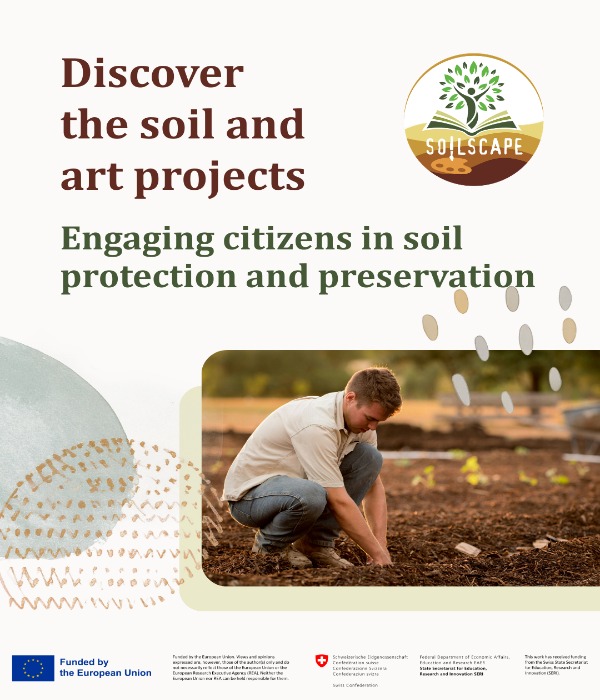
The Living Soils Project is a national initiative designed to regenerate degraded urban soils across three Spanish municipalities (Barakaldo, Villalbilla, and Navacerrada) while fostering soil literacy and community engagement. By combining ecological restoration, citizen science, and participatory art, the project turns soil into a cultural and educational resource.

Through the creation of edible micro-forests, inoculation with mycorrhizal fungi, and installation of low-cost sensors, the project will improve soil health indicators by at least +15% in organic carbon and +20% in microbial diversity. At least 700 citizens—with strong representation of women, youth, migrants, and vulnerable groups—will directly participate in workshops, soil monitoring, and creative activities, reaching 1,500 indirect beneficiaries.

Artistic interventions, public festivals, and a traveling exhibition will translate scientific data into multisensory experiences, reinforcing learning and behavioral change.

A standardized national protocol and open dataset will ensure replicability, with at least three European cities testing the methodology.

By the end of 18 months, the project will deliver restored urban soils, inclusive community participation, open knowledge resources, and cultural outputs that together contribute to the EU Soil Mission target of achieving healthy soils by 2030.

Motivation Statement

Soil is the living skin of the planet, a mixture of minerals, water, air and organisms that sustains all life on Earth. When I hear the word soil, I think of an invisible ecosystem that filters water, stores carbon, produces food and connects roots, fungi, bacteria and insects in a network of cooperation.

It is memory: it stores the climatic and cultural history of each place. It is also the future:

its health determines our resilience to climate change and the habitability of our cities.

Soil is not just ‘earth’; it is biodiversity, heritage and a renewable resource if we take care of it, but fragile if we neglect it.

Protecting it means protecting our food, our culture and our daily lives.

Sub-project objectives

1. Ecological Restoration – Restore at least 3 ha of urban soil through participatory creation of edible forests and inoculation with mycorrhizal fungi.
2. Citizen Engagement and Inclusion – Reach at least 700 direct participants and 1 500 indirect beneficiaries, ensuring that at least 50 % are women, 30 % are young people or children, and 20 % belong to groups with fewer opportunities.
3. Scientific Monitoring – Collect and analyze comparable indicators—moisture, pH, organic carbon, and microbial diversity—in three pilot cities (Barakaldo, Villalbilla, Navacerrada), with quarterly data submissions to an open repository.
4. Replication Protocol – Produce an open, peer-reviewed national protocol for urban soil regeneration and a freely accessible dataset by the end of the project.
5. Cultural Impact – Deliver a minimum of six public art installations, nine educational workshops, and one traveling exhibition, evaluated by visitor numbers (target: 3000 combined) and qualitative feedback demonstrating increased understanding of soil health.


Challenges and how they will be addressed

The Living Soils Project work plan follows three consecutive phases—Design, Development, and Validation—to ensure methodological consistency, strong citizen participation, and measurable results. Each phase ends with a mandatory report that tracks progress and authorizes payments, with interim milestones for scientific and social monitoring.


Expected outcomes

Tangible outputs include restored soil areas, edible micro-forests, a standardized monitoring dataset, and a publicly available replication guide. Non-tangible results encompass stronger community cohesion, improved public understanding of soil’s role in climate resilience and food security, and a durable culture of collaboration between artists, scientists, and local residents. Collectively, these outcomes will contribute to the EU Soil Mission goal of healthy soils by 2030 and provide a scalable model for other European cities.

Meet the Project Team

Sdl Investigacion Y Divulgacion Del Medio Ambiente Sl

Founded in 2000, our team is comprised of professionals passionate about their work, with extensive and varied experience in the fields of singular trees, urban trees, and green infrastructure. We help institutions, municipalities, companies, professionals, and organizations improve the urban environment and tree management.

Contact – Susana Domínguez Lerena.

Facebook. Instagram. X. YouTube

SDL